
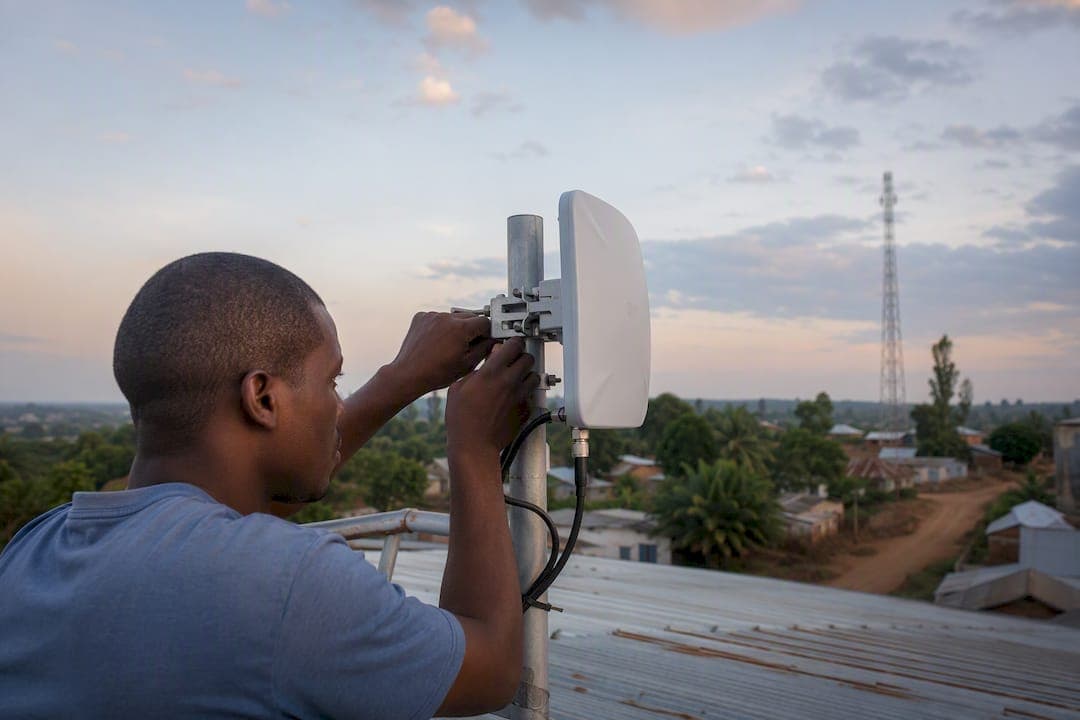
If your property has a clear line of sight to an nbn tower, fixed wireless is generally the better call. It's faster on average, cheaper to run, and less exposed to weather than satellite. If your block is boxed in by ridgelines or timber and no tower reaches you, satellite (either Starlink or nbn's Sky Muster) becomes the only workable option, not just the preferred one.
ACCC's Measuring Broadband Australia data backs this up: nbn Fixed Wireless Superfast averaged 283.5 Mbps in the busy hour, well ahead of Starlink's 170.2 Mbps. nbn allocates fixed wireless to properties within its defined tower footprint and pushes everyone else to satellite by design, not preference.
- Tower visibility + budget matters → nbn Fixed Wireless
- No tower, no line of sight, remote block → Starlink or Sky Muster
- Next step → run an address check or book a site survey before signing anything
Key Takeaways
Fixed wireless outperforms satellite on cost and reliability wherever a tower reaches the property, while satellite remains the only option once line of sight or tower footprint runs out.
| Point | Details |
|---|---|
| Check availability first | Run an nbn address check, then confirm real line of sight before assuming eligibility. |
| Speed gap has narrowed | Fixed Wireless Superfast hit 283.5 Mbps busy-hour in ACCC testing, ahead of Starlink's 170.2 Mbps. |
| Latency separates the options | GEO satellite (Sky Muster) lags on real-time apps; LEO (Starlink) and fixed wireless perform far better. |
| Data caps still shape value | Sky Muster caps data, Sky Muster Plus adds unmetered allowances, and most fixed wireless plans stay unlimited. |
| Book professional commissioning | Djcengineering surveys tower sightlines, sky sectors, and mounting points before installing Starlink or Fixed Wireless. |
Table of Contents
- Fixed Wireless vs Satellite: The Technical Differences That Matter
- How Fast Is Each Option, Really?
- Can You Even Get Fixed Wireless or Satellite at Your Address?
- What Fixed Wireless, Starlink, and Sky Muster Actually Cost
- Getting Connected: What Installation Actually Involves
- What We See Go Wrong on Australian Sites
- Get a Professional Site Survey Before You Commit to Either
- Sources
Fixed Wireless vs Satellite: The Technical Differences That Matter
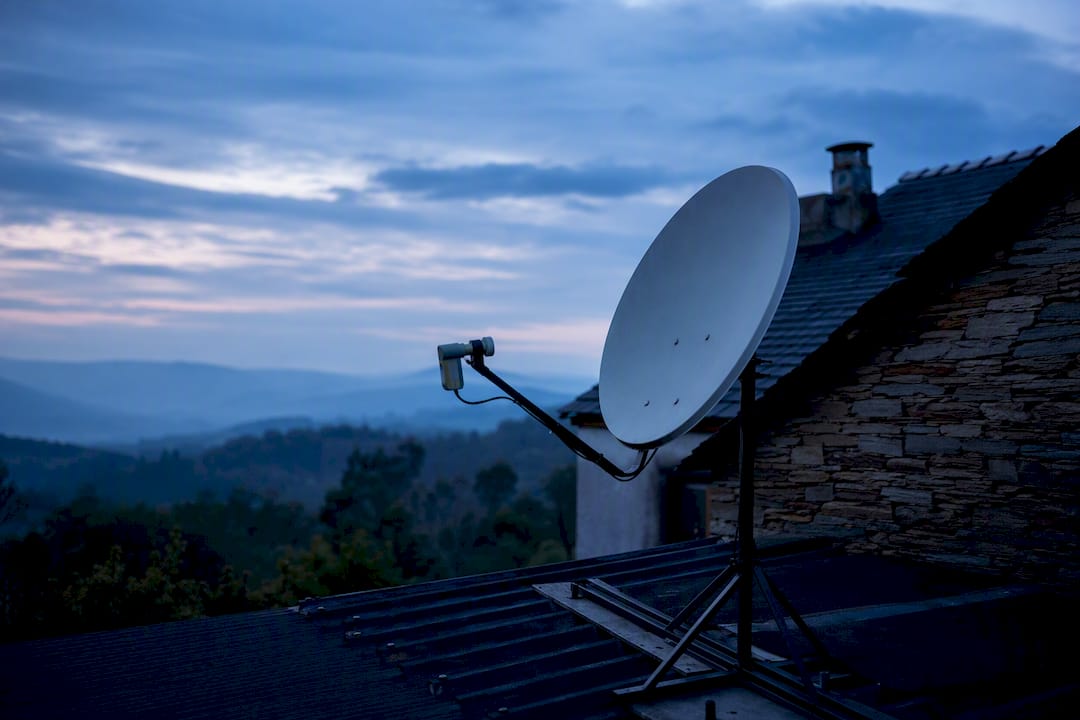
The core distinction comes down to what's beaming the signal and from where. nbn Fixed Wireless relies on dedicated hybrid 4G/5G transmission towers, with a directional outdoor antenna bolted to your roof or a mast pointed straight at the nearest tower. Satellite skips towers entirely and talks to something orbiting the planet instead, whether that's nbn's geostationary Sky Muster and Sky Muster Plus, sitting roughly 36,000 kilometers up, or Starlink's low earth orbit (LEO) constellation, sitting a few hundred kilometers up.
That altitude gap is the whole story. Here's what separates the three main categories in practice:
- nbn Fixed Wireless — tower-based, requires line of sight, allocated by nbn based on distance from a tower and local terrain.
- Sky Muster (GEO satellite) — covers the most remote premises in Australia, no tower needed, but signal travel time is long because of the distance to a geostationary orbit.
- Starlink and other LEO services — satellites orbit close to Earth, cutting the distance signals travel and therefore cutting delay, at a materially higher hardware cost.
nbn draws a hard line based on your property's coordinates, not your preference. If you sit inside a fixed wireless cell, that's your allocation. Outside it, you're routed to satellite, which is why the WhistleOut comparison of Starlink and NBN rightly frames footprint as the decisive factor, not brand loyalty.
How Fast Is Each Option, Really?
The numbers: ACCC's June 2025 testing found busy-hour download speeds for Starlink, nbn Fixed Wireless Home Fast, and nbn Fixed Wireless Superfast all exceeded 100 Mbps, with Superfast achieving the highest speeds.
Both technologies now clear 100 Mbps in the busy hour, according to ACCC, which means raw download speed rarely decides the argument anymore. What does decide it is latency and consistency.
Sky Muster's geostationary orbit adds a noticeable round trip delay, often making video calls and cloud-based business apps feel sluggish even when the download number looks fine. Starlink's LEO satellites cut that delay dramatically compared with older GEO systems, according to ABC News' explainer on the technology, which is why it handles video calls and online gaming far better than Sky Muster does.
Fixed wireless tends to sit in the middle on latency but wins on reliability: ACCC's testing found fixed wireless recorded fewer outages and lower packet loss than the satellite services measured in the same period, while Starlink generally posted higher upload speeds. For practical purposes:
- Video calls and remote work → fixed wireless or Starlink, not Sky Muster
- Large file uploads for business → check upload figures specifically, not just download
- Rock-solid uptime → fixed wireless, when a tower is available
Can You Even Get Fixed Wireless or Satellite at Your Address?
Availability is the real gatekeeper here, more than price or speed. nbn sets fixed wireless boundaries around tower distance and terrain, and nbn's own fixed wireless documentation confirms the network has been progressively upgraded, but the serviceable footprint still stops at a defined line. Sky Muster exists specifically to catch everyone outside that line.
Checking eligibility takes minutes, not weeks:
- Run your address through nbn's official checker to see your allocated technology.
- If you sit near the fixed wireless boundary, request a site survey rather than trusting the online map alone.
- Confirm actual line of sight to the tower, since trees and hills can block a technically "serviceable" address.
Pro Tip: A tree canopy or a mast that's just a meter too low can flip a borderline property from unserviceable to serviceable for fixed wireless. That's exactly the kind of detail an on-site survey catches and an online address checker misses.
When no fixed wireless tower reaches your block at all, Starlink or Sky Muster stop being alternatives and become the only real broadband path available.
What Fixed Wireless, Starlink, and Sky Muster Actually Cost
Monthly pricing and hardware costs pull in opposite directions depending on which technology you're weighing. Fixed wireless plans generally run comparable to standard nbn plans with unlimited data as standard, and no satellite dish or LEO terminal to buy upfront.
Satellite flips that equation. One industry cost analysis pegs typical WISP-style fixed wireless plans at $40 to $80 a month against roughly $120 for Starlink in comparable regional scenarios, according to the Rural Internet Guide's 2026 comparison, though actual Australian retail pricing varies by provider and should be treated as an industry estimate rather than a fixed figure.
Data allowances add another layer. Sky Muster runs on defined data caps with shaping once you exceed them, while Sky Muster Plus adds unmetered allowances for specific traffic types under fair-use conditions. Starlink applies priority access thresholds rather than hard caps.
- Lower ongoing cost, no hardware purchase → fixed wireless, where available
- Higher hardware cost, no data cap concerns for most households → Starlink
- Lowest monthly fee but capped/shaped data → Sky Muster
Getting Connected: What Installation Actually Involves
A proper fixed wireless or Sky Muster install isn't a box you plug in yourself. It follows a defined sequence:
- Site survey — confirming tower distance, line of sight, and mounting options.
- External antenna or dish mount — positioned and aligned for the strongest, most stable signal.
- Cabling run — routed cleanly from the roof or mast to the connection point inside.
- Indoor termination and testing — connecting the nbn box or router and confirming speeds match expectations.
DIY LEO kits let you set up a dish on a tripod in the backyard within the hour, but that convenience trades off against alignment precision and weatherproofing. nbn-accredited fixed wireless installs go through professional commissioning, which materially improves stability compared with a self-aligned setup, and carries manufacturer and installer warranties that DIY jobs generally don't.
Pro Tip: Ask any installer for a signal alignment report and expected speed range in writing before they leave site. If they can't produce one, that's a red flag.
What We See Go Wrong on Australian Sites
After surveying enough rural and semi-rural sites across South East Queensland, the failure patterns repeat themselves. A site survey needs to check tower sightlines, a genuinely clear sky sector for satellite dishes, viable mast mounting points, sensible cable routing, available power near the mount point, and where the indoor equipment will actually live.
The recurring problems we see:
- Antennas aimed slightly off-tower, quietly cutting throughput by half without any obvious fault.
- Vegetation growth blocking a satellite dish's sky view months after a clean install.
- Missing grounding and surge protection on exposed rooftop hardware, which becomes expensive after the first storm season.
- Tower congestion during peak hours in areas with dense fixed wireless take-up.
Weather adds its own wrinkle. LEO satellite performance can suffer from rain fade during severe weather, while a well-engineered fixed wireless link tends to hold up better under the same conditions, provided the tower itself has capacity to spare.
If you're not confident diagnosing any of that yourself, that's the point where a professional install earns its cost. Expect a proper installer to hand over a signal alignment report, measured speed results, and a warranty on the workmanship, not just the hardware.
A Practical Read on the Fixed Wireless vs Satellite Decision
For most small businesses and work-from-home households near a tower, fixed wireless is the sensible default: cheaper, steadier, and good enough on latency for video calls. Isolated properties with no tower access should treat Starlink as the practical baseline, with Sky Muster Plus worth a look only if data caps genuinely don't matter to you. Once you're weighing antenna placement, sky sectors, or tower congestion, that's your cue to bring in a professional rather than guess.
Get a Professional Site Survey Before You Commit to Either
Djcengineering installs both sides of this decision across South East Queensland, so there's no guesswork about which technology actually works at your address.

That fix rate matters more than it sounds. A misaligned antenna or a dish with a blocked sky sector doesn't just underperform, it fails intermittently in ways that are hard to diagnose from a phone call. Our installers scope the site properly the first time: tower sightlines, sky sectors, mounting points, cabling runs, and indoor equipment placement, all assessed before anything goes on the roof.
If you're deciding between fixed wireless and satellite for a home or business anywhere in SE Queensland, book a connectivity site survey with our team and get a straight answer on what your property can actually support.
Sources
- Wireless networks provide high speed alternatives to remote and regional households | ACCC
- Fixed Wireless explained | nbn
- Comparison of nbn satellite products | nbn
Recommended
- Starlink: High-Speed Internet Guide for Rural QLD | DJC Engineering
- Professional WiFi Design & Installation: Engineering Seamless Connectivity in SE QLD | DJC Engineering
- Professional WiFi Design vs Mesh: Why Your Gold Coast Home Still Has Black Spots | DJC Engineering
- Commercial WiFi Systems: Engineering High-Performance Networks for QLD Businesses | DJC Engineering