
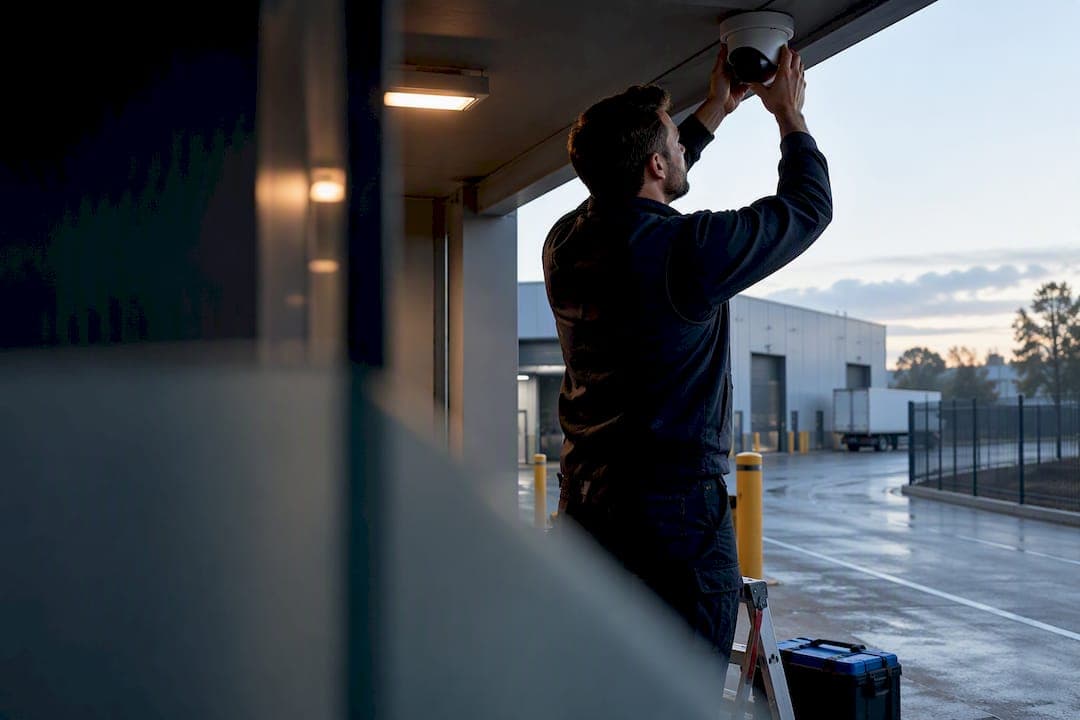
CCTV in Australia sits under two separate compliance layers: technical standards and legal obligation. Technically, the AS/NZS 62676 series and AS 4806 govern system design, transmission, and image quality. Legally, the Privacy Act 1988 and state surveillance or workplace laws govern how footage is captured, stored, and used. Immediate must-dos: define the operational purpose, install visible signage, keep cameras off private areas, secure recordings, and set a documented retention period.
TL;DR:
- CCTV in Australia must comply with both technical standards from AS/NZS 62676 series and legal obligations under various surveillance laws.
- Installing cameras requires mapping private areas and installing signage with written notices in jurisdictions like NSW and ACT.
- Audio recording is highly regulated; disable microphones unless a lawful basis and documented consent are in place.
- Many compliance failures are minor, like misaligned cameras or default retention settings, emphasizing the importance of proper planning and on-site checks.
Table of Contents
- What Are CCTV Standards in Australia?
- Privacy Act, State Surveillance Laws, and Workplace Rules
- On-Site Compliance Checklist for Installers and Managers
- Technical Specs the Standards Actually Call Out
- Policies, Contracts, and Breach Response That Hold Up
- What Standards Compliance Actually Looks Like on Site
- Get a Standards-Aligned CCTV System Installed Right the First Time
- Sources
- FAQ
What Are CCTV Standards in Australia?
CCTV standards in Australia come primarily from the AS/NZS 62676 series, the technical backbone for any system spec you write or sign off on. Standards Australia adopts these from the international IEC 62676 series with local modifications, which matters when you're writing a compliance statement for a tender or insurance audit.
Each part covers a different layer of the system:
- AS/NZS 62676.1.1:2020 sets minimum performance and functional requirements for video surveillance systems (VSS) used in security applications. It adopts IEC 62676-1-1 with Australian modifications, covering baseline system behavior rather than installation methods.
- AS/NZS 62676.1.2:2020 extends that with application-specific guidance for how a VSS should be configured for particular use cases.
- AS/NZS 62676.2.1:2020 deals with video transmission protocols, IP-based streaming requirements.
- AS/NZS 62676.3:2020 covers analog and hybrid interfaces, relevant if you're upgrading legacy systems rather than doing a clean IP build.
- AS/NZS 62676.4:2020 provides application guidelines, the practical bridge between the technical clauses and real deployment scenarios.
- AS/NZS 62676.5:2020 specifies data specifications and image quality: resolution benchmarks, compression, and metadata requirements.
AS 4806 remains the standard installers cite for CCTV operation and management, distinct from the design specs in 62676. Older projects and some best-practice guides still reference AS 4806 for governance rather than hardware. Because Standards Australia adopts IEC content with local amendments, a spec that just says "complies with IEC 62676" is not the same claim as "complies with AS/NZS 62676," and mixing the two up in a compliance statement is a common and avoidable error.
Privacy Act, State Surveillance Laws, and Workplace Rules
There's no single national CCTV law in Australia. Compliance is a patchwork: the federal Privacy Act 1988 sits alongside state and territory surveillance device acts and separate workplace surveillance rules, and all three can apply to the same camera at once.
The Privacy Act generally applies to organisations with annual turnover exceeding $3 million, plus some smaller entities in specific categories like health service providers. If it applies to your client, footage that identifies a person counts as personal information under the Australian Privacy Principles, and that triggers obligations around collection notice, storage security, and disposal.
State surveillance device acts add a separate, often stricter layer. Victoria's Surveillance Devices Act, for example, prohibits knowingly installing or using an optical surveillance device to record private activities without consent, with defined exceptions for things like law enforcement warrants. NSW and the ACT go further on workplace cameras specifically, requiring written notice to employees before covert or overt monitoring begins.
A few practical differences that trip up installers moving between states:
- Some jurisdictions treat a private conversation captured incidentally as a separate offense from the video capture itself.
- Workplace surveillance rules in NSW and the ACT require written notice, not just signage, before cameras go live in a workplace.
- Consent exceptions vary: what counts as "overt" monitoring in one state may still need documented notice in another.
Statistic to flag for clients: the $3 million turnover threshold is the single most misunderstood figure in this space. Plenty of small businesses assume the Privacy Act doesn't touch them, then discover a specific category exception applies anyway. Confirm status before assuming exemption.
Audio is the sharpest edge here. Several state frameworks treat a camera's built-in microphone as a private conversation recorder, which is regulated far more tightly than video capture. If there's no clear lawful basis and documented consent, disable the microphone. For anything ambiguous, that's the point to bring in legal counsel rather than guess.
On-Site Compliance Checklist for Installers and Managers
Standards compliance happens on paper. Legal compliance happens on site, camera by camera. Here's the sequence that actually holds up under scrutiny:
- Agree the operational purpose in writing with the client before you touch a bracket. Security monitoring, asset protection, and staff safety are different justifications with different downstream obligations, especially if law enforcement or a strata body has a stake in the footage.
- Map every field of view before mounting. Walk the site with the client and flag anything that captures a neighbor's yard, a bathroom window, or a break room. Use masking zones or physical tilt limits to keep private areas out of frame rather than trying to fix it in software later.
- Install signage at every reasonable entry point, not just the front door. Where state law requires written notice (NSW and ACT workplaces), get a signed acknowledgment on file, not just a poster on the wall.
- Set a defensible retention period and automate the purge. Thirty to ninety days covers most commercial use cases; extend it only for a documented reason like an active investigation or legal hold.
- Lock down access. Encrypt footage at rest and in transit, require multifactor authentication for remote viewing, and keep an access log that records who viewed what footage and when.
- Disable audio by default. Only enable it where there's a clear lawful basis and the client has documented consent or a specific exception.
Pro Tip: Run the signage and written-notice check as its own line item on the handover form, separate from the technical acceptance test. Installers who bundle it into the general walkthrough are the ones who miss it when the client's HR team asks for proof six months later.
Auditing access logs and automating retention purges aren't optional extras. They're the two controls that most reliably reduce breach exposure if footage is ever subpoenaed or challenged. For deeper guidance on the notice side, see this breakdown of workplace surveillance policy requirements.
Technical Specs the Standards Actually Call Out
Translating standard clauses into a job brief is where a lot of specs fall apart. AS/NZS 62676.5:2020 governs image quality and data specification: resolution benchmarks, lens selection tied to the required identification distance, exposure handling for mixed lighting, and timestamp accuracy for anything that might end up as evidence. If footage needs to hold up in a legal proceeding, timestamp drift of even a few seconds can undermine its usefulness.
On the network side, AS/NZS 62676.1.2:2020 and the 2.x parts cover transmission: secure transport protocols, recording control, and the bandwidth and latency budget needed to keep a multi-camera system from choking during peak hours. A few hardware notes worth baking into every brief:
- Budget PoE power properly. Undersized switches are the single most common cause of intermittent camera dropouts on commercial sites.
- Match IP ratings to exposure. Outdoor cameras in Queensland conditions need at minimum an IP66 rating for genuine weather resistance.
- Specify vandal-resistant housings for ground-floor and public-access cameras.
- Run a formal acceptance test covering image quality, recording continuity, and remote access before sign-off, not just a visual check on install day.
Standards separate "system requirements" from "installation and maintenance" for a reason: a camera can be fully compliant on paper and still be badly commissioned in the field. Both documents belong in your scoping file. For a deeper technical walkthrough on commercial-grade builds, this technical guide to high-performance surveillance covers acceptance testing in more depth.
Policies, Contracts, and Breach Response That Hold Up
Technical compliance and legal compliance both need to show up in writing, or none of it counts when someone asks for proof. A privacy policy specific to CCTV should state what's collected, why, how long it's kept, and who can access it. A separate workplace surveillance policy should cover employee notice, acceptable monitoring purposes, and how covert monitoring (where legally permitted) is authorized.
Vendor contracts deserve the same scrutiny as the cameras themselves:
- Data handling terms: where footage is stored, and whether a cloud vendor can access or export it.
- Security obligations written into the contract, not just implied in marketing material.
- Breach notification timelines specific to the vendor relationship.
- Deletion clauses that trigger automatically when the contract ends.
Retention schedules need clear triggers for exceptions: an active police investigation, a workplace incident under review, or a legal hold from counsel all justify extending storage past the default window. A documented breach response plan specific to footage compromise, covering who gets notified and how access logs get audited after the fact, is the difference between an incident and a crisis. Council and university CCTV policies are a useful reference point for structuring retention schedules that hold up under review.
What Standards Compliance Actually Looks Like on Site
Most compliance failures aren't dramatic. They're a camera angled two degrees too far into a neighbor's driveway, or a retention setting left on the manufacturer's default of indefinite storage. Balancing resolution against retention cost is a real trade-off: higher resolution eats storage fast, and clients often want both 4K clarity and ninety-day retention without understanding the cost that combination carries.
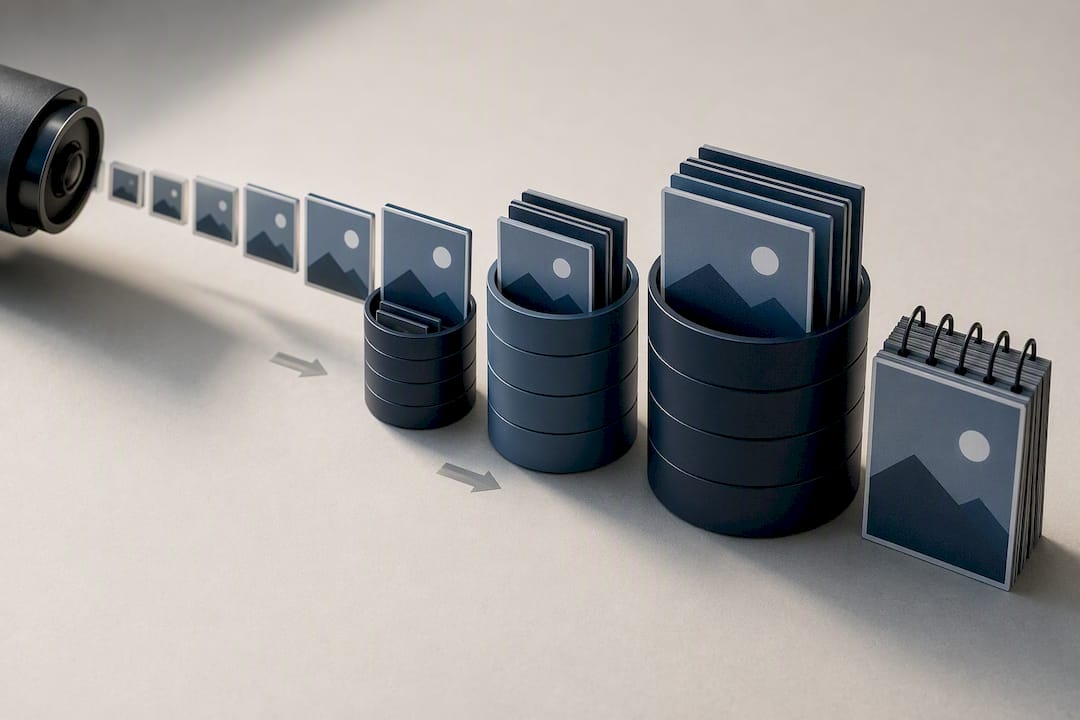
A network hardening checklist matters as much as the camera spec. Weak default passwords on NVRs are still the most common vulnerability found during post-install audits. Verifying signage and, where required, written notice should be a signed line item on every handover, not an assumption.
Working as a single accredited team without subcontractors changes how compliance documentation actually gets handled at handover. When the same people who scoped the job also configure the network and hand over the paperwork, nothing falls through the cracks between trades, and the client walks away with one coherent record instead of three partial ones.
— Dylan
Get a Standards-Aligned CCTV System Installed Right the First Time
Professional teams design and install CCTV systems as described in this article: standards-aware from the first site walk, not retrofitted after a compliance gap turns up. Such teams hand over a complete package, cameras, secure network configuration, and the documentation compliance files need.

Our NYX Security Camera Systems cover 4K CCTV with AI capabilities built for South East Queensland homes, businesses, and rural properties, paired with Ajax alarm integration where a site needs it. If access control or intercom systems are also part of the brief, our broader security services page covers the full integration. Every installation includes secure network setup, so remote viewing doesn't become the weak point in an otherwise compliant build.
If you're a building manager or business owner in South East Queensland weighing up a new system or an upgrade, request a compliance-focused site survey through our CCTV installation page and we'll walk the site with you before any hardware gets ordered.
This article is general information, not a substitute for advice from a qualified lawyer. Consult a qualified legal professional about your own circumstances before acting on anything here.
Sources
- Security cameras | OAIC
- AS/NZS 62676.1.1:2020 | Standards Australia Store
- Security Camera Laws for Businesses in Australia | Sprintlaw Australia
FAQ
What Is AS 4806 in Australian CCTV Standards?
AS 4806 is the Australian standard series commonly referenced for CCTV operation and management guidance, distinct from the AS/NZS 62676 series that covers system design and image specifications. Installers often cite it alongside 62676 when documenting management and operational practices rather than hardware performance.
What Is the AS/NZS 62676 Standard in Australia?
AS/NZS 62676 is the current series of Australian and New Zealand standards for video surveillance systems, covering system requirements, transmission, interfaces, application guidance, and image quality. AS/NZS 62676.1.1:2020 specifically sets minimum performance and functional requirements for security applications.
Does the Privacy Act Apply to My CCTV System?
The Privacy Act 1988 generally applies to organisations with annual turnover exceeding $3 million, along with certain smaller entities in specific categories. If it applies, footage identifying a person is treated as personal information subject to the Australian Privacy Principles.
Can I Access Australian Standards for Free?
No, Australian standards including the AS/NZS 62676 series are copyrighted and sold through the Standards Australia store, not available for free download. Some libraries and industry associations offer limited access through membership or subscription arrangements.
Do I Need Written Notice Before Installing Workplace CCTV?
It depends on the state. NSW and the ACT require written notice to employees before workplace surveillance begins, while other jurisdictions accept clear signage as sufficient notice in most cases. Check your specific state's workplace surveillance requirements before installation, since getting this wrong can invalidate otherwise compliant footage.
Is Audio Recording Allowed on CCTV Systems in Australia?
Audio recording is more legally restricted than video capture and often requires express consent or a clear lawful basis under state law. The safer default for most commercial installations is to disable microphones entirely unless a documented exception applies.
Recommended
- Commercial CCTV Systems: The Technical Guide to High-Performance Surveillance in 2026
- CCTV Installation Gold Coast: The Technical Checklist for High-Performance Security
- 3 Practical Moves to Cut Risk Under CCTV Privacy Laws in Australia
- CCTV Cameras Installation Brisbane: How to Engineer a High-Performance Security System