
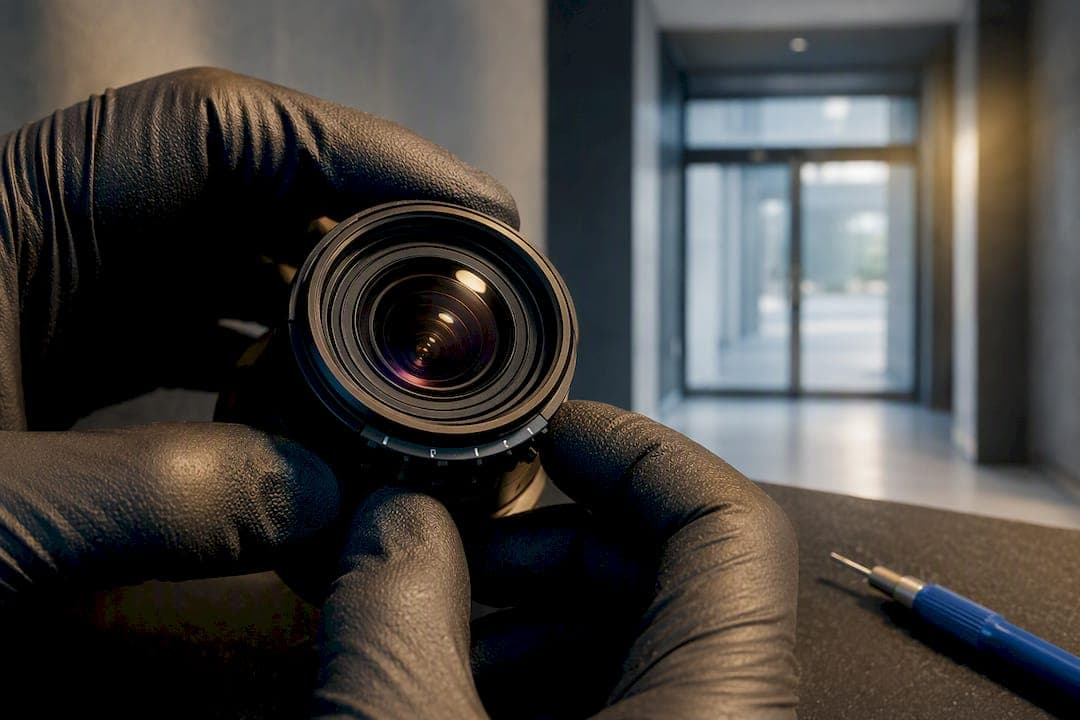
Choose fixed when the camera's job is simple, permanent, and budget matters more than flexibility. Most professional installers reach for varifocal by default because it hedges against a bad guess made during planning. Homeowners with small, predictable spaces usually get more value from fixed lenses. The full checklist below tells you exactly how to decide.
TL;DR:
- Variable focal length lenses offer on-site adjustment, reducing the risk of choosing an unsuitable fixed lens for uncertain or changing coverage needs.
- Fixed lenses are more cost-effective and easier to install but lack flexibility if the coverage area or focus distance changes after installation.
- Site surveys are essential for accurate lens selection, as they reveal real-world framing, lighting, and distance factors that specs alone cannot predict.
- Motorized varifocal units provide easy remote tuning but have higher upfront costs and potential mechanical failures, unlike manual models which require ladder access for adjustments.
- For stable, predictable spaces, fixed lenses are the economical choice, but uncertain, large, or evolving sites generally benefit from the adjustability of varifocal lenses.
Table of Contents
- Varifocal vs Fixed Lens: The Basic Difference
- Varifocal Lens Advantages and Fixed Lens Advantages
- When to Use Fixed Lenses vs Varifocal
- Installing and Adjusting Varifocal vs Fixed Cameras
- How Focal Length and Pixel Density Affect What You Actually See
- Cost and Procurement: Buying Retail vs Hiring a Pro
- A Checklist for Choosing Between Varifocal and Fixed Lenses
- What Site Surveys Actually Reveal About Lens Choice
- Get a Site Survey Before You Buy Either Lens Type
- An Installer's Take on Picking the Right Lens
- Sources
- FAQ
Varifocal vs Fixed Lens: The Basic Difference
A fixed lens has one permanent focal length. What you see on day one is what you see forever, unless you physically swap the camera. A varifocal lens lets you adjust the focal length within a range, typically something like 2.8 to 12 millimeters, so the same camera can zoom in tight on a doorway or widen out to cover a parking lot, depending on how you set it during installation.
There's a third category worth separating from both: pan-tilt-zoom (PTZ) cameras. PTZ units physically move and zoom in real time, usually under operator or software control, and they cost considerably more than either fixed or varifocal fixed-position cameras. A varifocal lens is not a zoom lens in the PTZ sense. You set it once during commissioning (or occasionally via motorized remote control), not continuously while monitoring.
Here's how the three stack up on the traits that actually matter for a buying decision:
- Field-of-view flexibility: Fixed offers none after install; varifocal offers real adjustment; PTZ offers full range plus live movement.
- Installation complexity: Fixed is simplest, mount, and go; varifocal needs a focus and zoom pass at commissioning; PTZ needs configuration of movement presets too.
- Unit cost: Fixed is cheapest, varifocal costs more, PTZ costs the most by a wide margin.
- Best fit: Fixed suits confirmed, unchanging views; varifocal suits uncertain or evolving coverage needs; PTZ suits active monitoring of large, dynamic areas.
Once you know which bucket your project falls into, the pros and cons get a lot easier to weigh.
Varifocal Lens Advantages and Fixed Lens Advantages
The core trade is flexibility versus simplicity, and both sides have a real case.
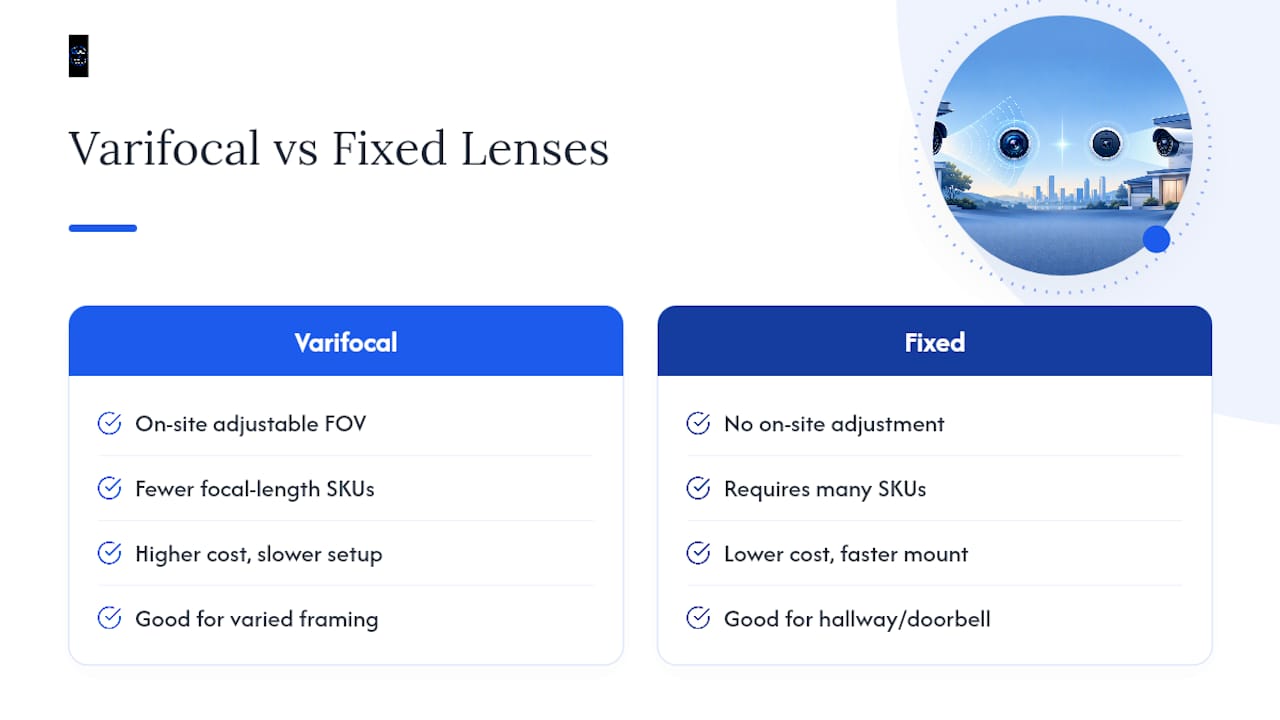
Varifocal's biggest advantage is that one camera model can cover a wide range of framing needs. An installer carrying varifocal units doesn't need to guess the exact distance to a target zone before showing up. They can fine-tune the shot on site, narrowing the field of view to capture a face or license plate clearly, or widening it to watch a whole yard. That flexibility is also why integrators use varifocal lenses roughly twice as often as fixed lenses in commercial work. It cuts down on how many different focal-length SKUs a company has to stock and reduces the odds of installing the wrong camera for the space.
The downside is cost and, to a lesser degree, complexity. Varifocal units are more expensive than fixed models and take a bit more time for focus and zoom adjustment during installation. That's a small price for a professional crew, but it's friction for a DIY buyer trying to get a camera up before dinner.
Fixed lenses flip that equation. They're cheaper, they mount faster, and there's nothing to misadjust. For a hallway camera or a doorbell replacement, that simplicity is the entire appeal. The catch is permanence: once it's mounted and the field of view is wrong, your only fix is moving the camera or replacing the lens entirely.
For installers, there's a business-logistics angle too. Stocking a handful of varifocal models covers most jobs; stocking enough fixed-focal variants to match every site condition means carrying far more inventory and making more return trips when the wrong focal length shows up on the truck.
Pro Tip: Ask an installer how many focal lengths they carry on a typical job. If the answer is "just varifocal," that's usually a sign they can adjust on the spot instead of scheduling a second visit.
When to Use Fixed Lenses vs Varifocal
The right lens depends less on the camera and more on how well you already know the space.
- Warehouses and long driveways. Distances vary, sightlines are long, and the exact spot you need in sharp detail (a loading dock, a gate) often isn't obvious until the camera is actually mounted and tested. Varifocal wins here almost every time.
- Parking lots and open yards. Coverage needs shift as vehicles move and layouts change, and a wider adjustable range beats a locked-in guess made from a floor plan.
- Uncertain or evolving layouts. Renovations, added structures, or a business that expects to grow into new space all argue for varifocal, since it's ideal when the exact field of view is unclear during planning.
- Hallways and small rooms. The distance from camera to subject rarely changes in a narrow interior corridor, so a fixed lens covers it just as well as a varifocal one, for less money.
- Predictable single-purpose viewpoints. A camera aimed permanently at a cash register, a front door, or a server room rack doesn't need adjustment range it will never use.
A quick worked comparison makes the point concrete: a warehouse entrance with a 40 foot approach and unclear final camera height is a varifocal job, full stop. A supply closet or a narrow interior hallway with a fixed 12 foot throw distance is a fixed-lens job, and paying for varifocal there just wastes budget on adjustment range you'll never touch.
Installing and Adjusting Varifocal vs Fixed Cameras
Fixed lenses are close to plug-and-play. Mount the bracket, aim the camera body at the target area, and you're done, since there's no focal adjustment to make.
Varifocal cameras need an extra step during commissioning:
- Manual varifocal requires the installer to physically turn a ring or use a small lever on the lens housing to widen or narrow the field of view, then lock it in place. This usually means ladder access at the exact mounting height, because judging the shot from ground level is unreliable once the camera is 10 or 12 feet up.
- Motorized varifocal lets the installer (or the camera's software interface) adjust zoom and focus remotely, often from a laptop or phone connected to the system. No return trip up the ladder if the framing needs a tweak after the fact.
- Re-focus after zoom changes. On many varifocal lenses, changing the zoom setting shifts the focus point too, so a proper install includes a focus pass after every zoom adjustment, not just once at the start.
- Maintenance implications. Motorized units have small motors that can eventually wear out, an extra point of failure fixed lenses simply don't have. It's a fair trade for sites where reconfiguration is likely, according to installer guidance on motorized versus manual varifocal tradeoffs, but it's not something to bolt onto every camera by default.
The practical upshot: manual varifocal saves money over motorized but costs you a ladder trip if you ever want to change the shot. Motorized varifocal costs more upfront but pays that back the first time you need to widen a view without renting scaffolding.
How Focal Length and Pixel Density Affect What You Actually See
Field of view and focal length move in opposite directions. A shorter focal length (around 2.8mm) gives you a wide, sweeping shot, useful for watching an entire room or yard. A longer focal length (up toward 12mm on a typical varifocal range) narrows the shot and pulls the subject closer, at the cost of peripheral coverage.
That narrowing matters more than most buyers realize because of pixels per foot, or ppf, the measure of how much sensor resolution is actually landing on your subject of interest. A varifocal lens lets you narrow the field of view to concentrate more of the sensor's pixels onto a smaller area, which is the difference between a video that merely shows a person walked by and one where you can read a license plate or recognize a face.
Illustrative numbers help make this concrete, though your actual result depends on the specific camera and lens:
- A wide setting (around 2.8mm) might comfortably cover an entire driveway but deliver low detail on any one vehicle 40 feet away.
- A narrower setting (closer to 8 to 12mm) on the same lens, pointed at that same 40 foot distance, can raise the ppf enough to make a plate legible.
Sensor size, resolution, and wide dynamic range (WDR) performance in low light all affect the final result too. Focal length is one lever among several, but it's the one you can actually adjust after the camera is already mounted, which is exactly why varifocal exists.
Cost and Procurement: Buying Retail vs Hiring a Pro
Unit-for-unit, fixed lenses cost less than varifocal, which is a big part of why they dominate the home and DIY camera market. If you're buying one or two cameras off a shelf for a known, simple spot, that price gap is real money.
The math changes once you're buying multiple cameras or hiring installation:
- Fixed-lens fleets require stocking (or buying) several different focal lengths to match different distances around a property, which adds cost and complexity fast.
- A single varifocal model can often replace two or three fixed-focal SKUs, cutting down on both purchase decisions and installer callbacks for the wrong lens.
- Professional commissioning, where the installer actually tests and adjusts focal length and checks image detail on site, tends to prevent the expensive mistake of a camera that looks fine on a spec sheet but delivers useless footage at the real distance.
For a single, simple, permanent camera, fixed and DIY is a reasonable call. For anything with more than a couple of cameras or any uncertainty about distances, the labor and inventory savings from varifocal usually outweigh the higher unit price.
A Checklist for Choosing Between Varifocal and Fixed Lenses
Work through these questions before you buy anything or sign a quote.
- Are you certain about the exact coverage area? If yes, and it won't change, fixed lens is fine. If there's any doubt, lean varifocal.
- What identification distance do you actually need? Reading a face at 15 feet is a different lens setting than reading a plate at 50 feet, and you need this number before committing to hardware.
- What's your real budget envelope? Compare the varifocal premium against the cost of replacing a wrong fixed lens later, not just the sticker price today.
- Will you ever need remote tuning? If the site might get reconfigured, or physical access is hard (a high eave, a steep roof), motorized varifocal earns its premium.
- Is future expansion likely? New structures, added rooms, or growing operations argue for the flexibility varifocal buys you now.
When you're briefing an installer, ask them directly: what ppf can they guarantee at your specific identification distance, what focal range will the proposed lens actually cover, and what warranty applies to motorized parts specifically. Vague answers to any of those three are a red flag, along with a quote that skips a site survey entirely, since distance and lighting change the real-world result far more than a spec sheet suggests.
Pro Tip: If an installer can't tell you the expected ppf at your target distance before the job starts, they haven't actually planned the shot, they're guessing.
What Site Surveys Actually Reveal About Lens Choice
A camera spec sheet tells you the focal range. It doesn't tell you what that range actually looks like from your specific eave height, at your specific distance, in your specific lighting. That gap is why site surveys matter more than most buyers expect.
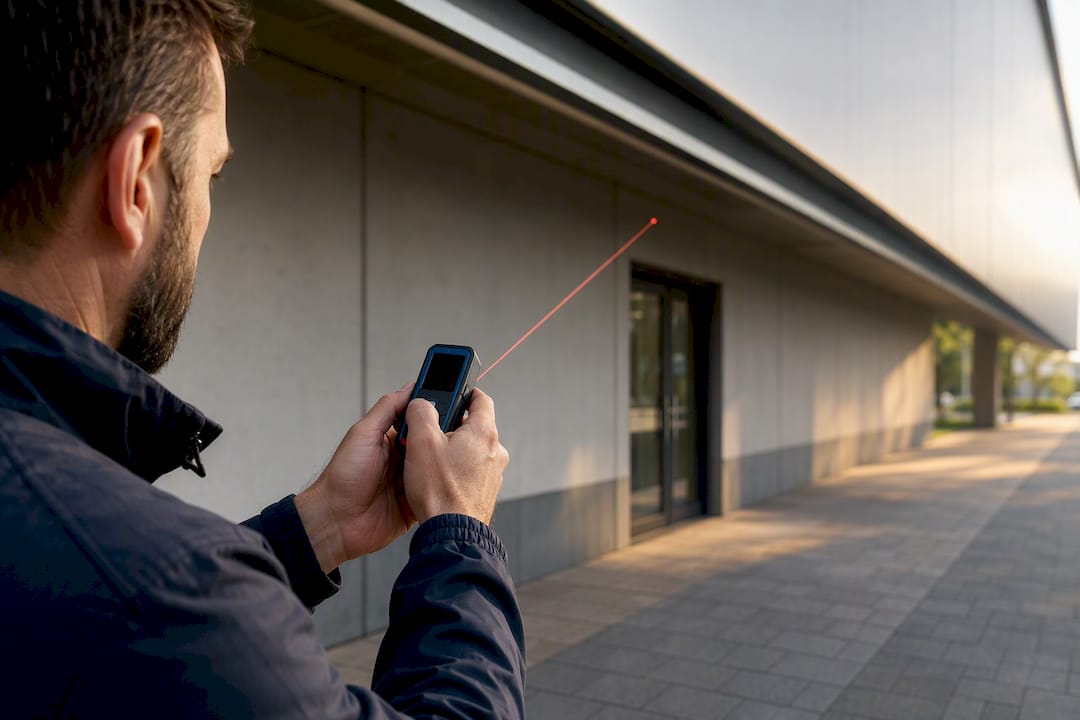
A best practice approach on installs is to walk the site first and let the layout decide the lens, rather than picking hardware off a catalog page in advance. Where framing is uncertain, varifocal goes in. Where the shot is locked and simple, fixed does the job for less money. Skipping that verification step is the single most common reason a "fine on paper" camera setup delivers disappointing footage months later.
Get a Site Survey Before You Buy Either Lens Type
You could pick a lens off a spec sheet and hope it matches your driveway, your hallway, or your warehouse dock. An alternative is simpler: a real site survey first, then a camera and lens matched to what that survey actually shows, tuned and tested at the real mounting height before anything gets locked in place.

That process is used for accredited 4K CCTV installations with AI-assisted detection, delivered without subcontractors, across various homes, businesses, and rural properties. Whether the job calls for a single fixed camera on a back door or a full varifocal setup across a commercial yard, the lens gets chosen after the walkthrough, not before it. If you're weighing a CCTV upgrade or a new install and want the framing verified before you commit to hardware, request a site survey through the networking and security page and get a scoped quote based on your actual property.
An Installer's Take on Picking the Right Lens
Most homeowners overthink this decision because they're comparing lenses instead of comparing certainty. If you know exactly what you need to see and that view will never change, a fixed lens saves you money with zero downside. The moment there's any doubt about distance, layout, or future plans, varifocal is worth the extra cost, because guessing wrong on a fixed lens means buying a second camera. Ask any installer for a site survey and a ppf number before you commit to either. That one request separates a real quote from a guess.
— Dylan
Sources
- Varifocal vs Fixed Focal Lens (Public Report) — IPVM
- What Is a Varifocal Lens Camera? Fixed vs Varifocal — Secuview
- CCTV Camera Varifocal Lens: Guide for Smarter Security — Eufy
FAQ
What are the disadvantages of varifocal lenses?
Varifocal cameras cost more than fixed equivalents and take extra time to focus and zoom during installation, and motorized versions add a mechanical part that can eventually wear out.
Is it worth paying more for a varifocal lens?
It's worth the premium whenever coverage needs are uncertain, likely to change, or hard to access physically. For a simple, permanent, easily reached shot, a fixed lens does the job for less money.
Should you always choose varifocal for professional installs?
Not always, but professional installers lean toward varifocal more often because it lets them tune coverage on site and avoid stocking multiple focal lengths, which is why it's roughly twice as common in commercial installs as fixed lenses.
Why does my camera image look blurry or wrong after I adjust the zoom?
On most varifocal lenses, changing zoom shifts the focus point too, so the lens needs a fresh focus pass after every zoom adjustment, not just once at initial setup.
How is varifocal different from a bifocal or multi-focus lens?
"Bifocal" isn't standard camera terminology. Varifocal cameras adjust across a continuous focal range (like 2.8 to 12mm), unlike a fixed lens locked to one setting.
Recommended
- Security Camera Installation Gold Coast: High-Performance Surveillance Engineering
- Professional TV Wall Mounting Gold Coast: The 2026 Buying Guide
- CCTV Installation Gold Coast: The Technical Checklist for High-Performance Security
- Professional Audio Visual Installation: The Engineering Approach to Integrated Systems