
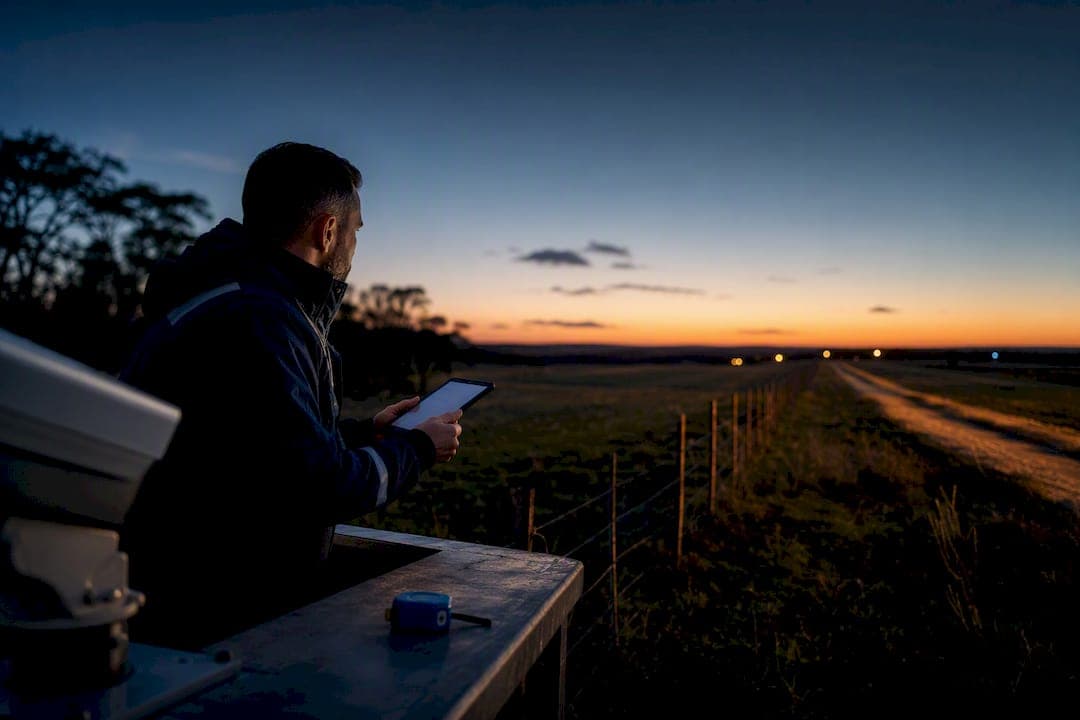
Thermal CCTV cameras are the right call when you need reliable detection in total darkness, smoke, or fog because they read heat, not light. They earn their keep on three jobs above all others: watching long perimeters, catching fires before flames are visible, and covering rural or industrial ground that ordinary cameras can't see across. If any of that describes your property, the next move isn't buying a camera off a spec sheet. It's booking a site survey so someone can measure your actual sightlines and target distances before you spend a dollar.
TL;DR:
- Thermal cameras can detect heat sources at long distances up to several hundred meters, but actual detection depends heavily on resolution, lens, and atmospheric conditions.
- High thermal resolution (up to 640×480) and NETD below 20 mK are critical specs for reliable detection and classification at extended ranges.
- Proper site survey and camera placement are essential to optimize detection range and minimize false alarms caused by reflective surfaces or environmental factors.
- Onboard analytics that classify objects reduce false alerts and improve detection accuracy, especially in industrial or rural settings.
- Installation should prioritize calibration, sensitivity tuning, and verified detection rather than relying solely on the spec sheet specifications.
Table of Contents
- What Are Thermal CCTV Cameras and How Do They Work?
- What Specs Actually Matter on a Thermal Camera Data Sheet?
- Which Thermal Camera Setup Fits Your Property?
- Getting Placement and Installation Right
- How Do You Choose the Right Thermal CCTV System?
- What Does Professional Installation Actually Deliver?
- Why the "Just Buy the Highest-Spec Camera" Advice Is Backwards
- Ready to Get a Site Survey for Thermal CCTV?
- Sources for Specs and Placement Guidance
- FAQ
What Are Thermal CCTV Cameras and How Do They Work?
Thermal cameras don't capture light at all. They read long-wave infrared radiation, which is the heat every object gives off regardless of how dark the scene is. That's the fundamental difference between a thermal sensor and a standard infrared (IR) security camera, which most people confuse with it.
An IR night vision camera works by flooding the scene with near-infrared light invisible to the human eye, then capturing the reflection, much like a normal camera works with a flashlight nobody can see. It still needs something to bounce that light off, and it still fails once the target is beyond the illuminator's throw, usually 30 to 50 meters on decent gear. A thermal sensor needs no illumination whatsoever. It's measuring temperature differences between a person, a vehicle, and the background, then converting that into a grayscale or color image.
This is why thermal footage looks the way it does: a white or bright silhouette of a body walking through pitch black scrub, with zero detail on clothing, face, or vehicle color. You will never identify a suspect by their features on thermal alone. What you get instead is unmistakable detection. A body is a body against a cold fence line at 2 a.m., whether there's a full moon or none at all.
That trade-off is the whole value proposition. Thermal imaging keeps working through conditions that blind every other camera type:
- Total darkness with no reliance on ambient light or illuminators
- Fog and smoke, where visible-light and even near-IR cameras produce a gray wash
- Light rain and dust, which scatter visible light far more than long-wave infrared
- Glare and backlight, since thermal isn't affected by headlights or a rising sun the way a standard sensor is
The limitations are real too. Thermal cameras struggle with emissivity, which is the tendency of some materials (shiny metal, glass, some plastics) to reflect ambient heat rather than radiate their own, producing false or confusing readings. Standing water, tin roofing, and car windshields can throw back reflected heat that reads as a warm shape where nothing is there. Heavy rain and thick fog eventually degrade thermal detection range too, just at a slower rate and shorter distance than they degrade a visible camera.
What Specs Actually Matter on a Thermal Camera Data Sheet?
Most thermal camera marketing leans on one number: "detects up to 500 meters." That figure is close to meaningless without context, because vendors use it inconsistently and it depends entirely on target size, lens, and atmospheric conditions on the day. Here's what to actually check.
Thermal resolution is the pixel count of the thermal sensor itself, commonly 160×120 on entry-level units up to 640×480 on high-performance models like the AXIS Q2112-E. Higher resolution means more pixels land on a distant target, which is what actually determines whether the system can detect, classify, or recognize something at range. A 640×480 sensor doesn't just look sharper. It extends the usable distance for every detection task compared with a lower-resolution unit on the same lens.
NETD (thermal sensitivity), measured in millikelvin (mK), tells you how small a temperature difference the sensor can distinguish. A camera with NETD under 20 mK, which top-tier models like the Q2112-E offer, will pick out a person partially hidden behind a parked car or obscured by light mist far more reliably than a camera rated at 50 mK or higher. This is the spec most buyers skip and most installers wish they wouldn't, because it's the difference between catching a genuine intrusion and missing it entirely on a cool, low-contrast night.
Frame rate shapes how usable the footage is for tracking and analytics. Lower frame rates are sufficient for static detection, while higher frame rates provide smoother motion for tracking and analytics.
Lens focal length and field of view drive the actual detection-range math. A wide lens covers more ground but shrinks the number of pixels on any given target, while a narrow, longer lens stretches detection distance at the cost of coverage width. Serious installers calculate this from the pixels-on-target you need for your use case, not from a vendor's blanket range claim.
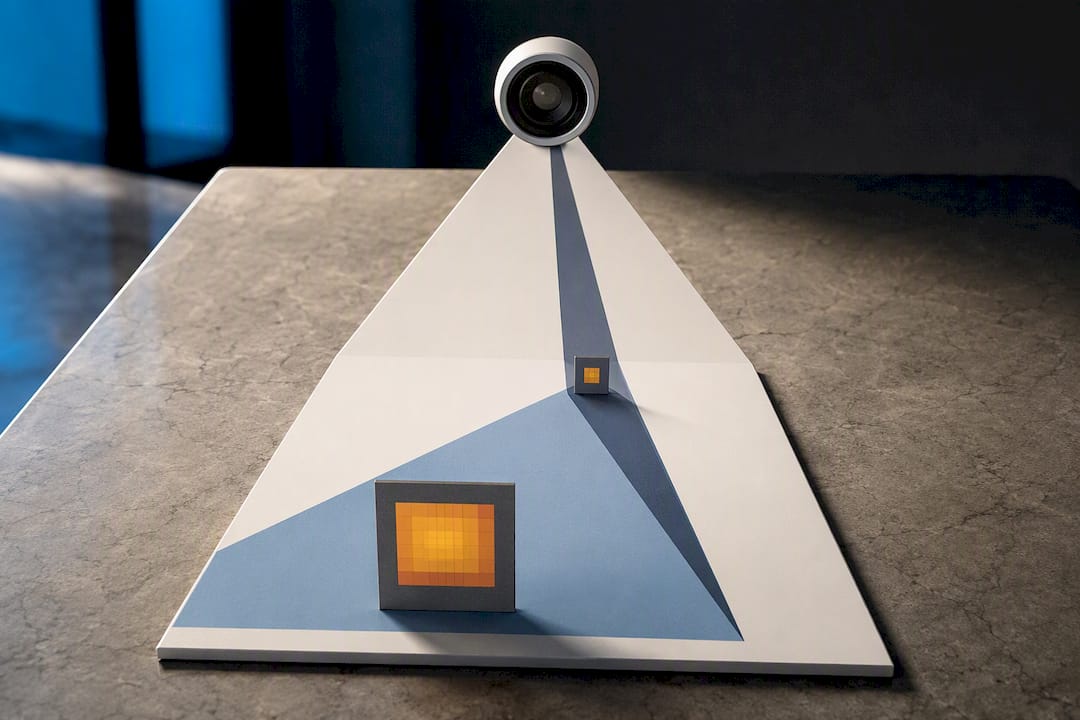
That range math also explains why "detection," "recognition," and "identification" ranges on a spec sheet are three different, much smaller numbers, in that order. A camera might detect a human-sized heat source at 400 meters but only classify it as a person versus an animal at 150 meters. Vendors like FLIR publish these ranges under controlled test conditions, so treat any published figure as a ceiling, not a guarantee for your site.
Beyond the sensor itself, check:
- Environmental rating: IP66 or IP67 for weather sealing, IK10 for impact resistance on cameras mounted within reach
- Onboard analytics: whether the camera can classify people versus vehicles versus animals at the edge, reducing false alarms before footage ever hits the recorder
- Dual-spectrum options: pairing a thermal sensor with a visible or 4K camera in one housing for daytime color verification alongside night detection
- Power and bandwidth: thermal streams are typically lighter than 4K visible footage, but dual-sensor units and high frame rates add up fast across a multi-camera site
Which Thermal Camera Setup Fits Your Property?
Not every site needs the same thermal configuration, and matching the camera class to the job saves money without cutting corners on detection.
-
Perimeter fencing and long boundary lines call for narrow field-of-view thermal units with higher resolution, paired with fence-line analytics that trigger on a crossing event rather than any heat source in frame. This is the classic use case: a rural boundary or commercial yard fence where a standard camera would show nothing but black past 20 meters.
-
Early fire detection and hot-spot monitoring uses thermal differently. Instead of watching for movement, the camera scans on a schedule and flags temperature anomalies against defined regions of interest (ROI), useful for warehouses storing combustible stock, recycling yards, or agricultural sites where a smoldering hot spot needs catching hours before visible flame.
-
Rural properties and equipment yards need rugged, weatherproof enclosures and thoughtful placement that avoids pointing at reflective surfaces like dams, tin sheds, or parked machinery. Where mains power isn't available at the mounting point, solar or battery-backed PoE solutions keep remote cameras running without trenching cable across paddocks.
-
Industrial yards and ports typically justify multispectral or dual-sensor setups, combining thermal detection with a 4K visible camera in the same housing, similar to the approach in FLIR's FH-Series. This gives operators a clear color image to verify what the thermal sensor flagged, cutting down on wasted patrol call-outs for false alarms.
Whatever the site, the camera needs to talk to the rest of your system. That means confirming ONVIF compatibility with your video management software (VMS) and making sure your network can carry the added stream without choking existing cameras or internet traffic.
Getting Placement and Installation Right
A thermal camera bolted up without a proper survey is the single biggest cause of underperforming systems. Detection range on paper means little if the mounting height, angle, and sightline weren't measured against your actual target size and distance requirement before install day.
The survey has to answer specific questions: how far away does a person need to be detected, what's the natural sightline from viable mounting points, and what's in the background that could throw off the sensor. This is also where most nuisance alarms get designed out before they ever happen, rather than tuned out afterward.
Placement mistakes to avoid:
- Aiming a thermal lens at standing water, glass, or a tin roof that can reflect ambient heat and trigger false detections
- Mounting too low, where foliage, vehicles, or livestock repeatedly cross into frame
- Ignoring seasonal heat load, like a north-facing wall that bakes all afternoon and throws off contrast at dusk
- Running cable without surge protection on exposed rural runs, where lightning-induced spikes are a genuine risk
On the physical side, most fixed thermal cameras run on Power over Ethernet (PoE), which simplifies cabling to a single run per camera instead of separate power and data lines. That said, longer rural runs or units drawing more power for heaters and onboard analytics sometimes need PoE+ or a local power injector closer to the camera. Cable routing should avoid running alongside high-voltage lines, which can introduce interference into the video signal.
Integration matters just as much as the hardware. Confirm the camera supports ONVIF for VMS compatibility, decide whether analytics run at the edge (on the camera) or on a central server, and plan storage capacity around your actual retention requirements rather than a rough guess. Our technical guide to high-performance CCTV systems covers network and storage sizing in more depth if you're specifying a multi-camera system.
Commissioning is the step most DIY installs skip entirely, and it's the one that separates a system that works from one that looks installed. That includes flat field correction (FFC) calibration to keep the thermal image uniform over time, setting up ROI zones matched to your actual risk areas, tuning sensitivity so wildlife and weather don't trigger constant alerts, and running a proof-of-performance test where someone walks the actual detection boundary to confirm the camera catches them where it's supposed to. For guidance on where each camera type should physically sit on your property, see our camera placement breakdown.
How Do You Choose the Right Thermal CCTV System?
Work through a short checklist before you accept any quote:
- Define your detection range requirement first. Measure the actual distance from the likely mounting point to the boundary you need covered, not a rough guess.
- Identify your target type. A human walking is a very different detection task from a vehicle, and lens and resolution choices follow from that.
- Set a NETD threshold. For low-contrast environments (foggy coastal properties, sites with a lot of foliage or parked vehicles), insist on sub-20 mK sensitivity rather than accepting whatever the cheapest unit offers.
- Match the environmental rating to the site. IP66 or higher for anything exposed, IK10 where the camera sits within reach of vandalism or livestock.
- Decide what analytics you actually need. Fence-line crossing, loitering, or classification of people versus animals all require different onboard analytics configurations, and not every camera handles all three well.
- Set a realistic budget band that includes cabling, power, commissioning, and any VMS licensing, not just the camera unit price.
When you're comparing quotes, ask suppliers directly: Does the quote include an on-site survey with test targets, or is the range figure taken straight from a data sheet? Will you receive a written commissioning report confirming FFC calibration and sensitivity tuning? Can they show reference sites or real footage from a comparable installation? What does the warranty cover, and who handles support if a camera drops offline in year two?
Red flags worth walking away from: a quote with no site visit at all, a single blanket "up to 500m" claim with no target-size context, and any installer who can't explain the difference between detection and recognition range when asked. Typical project timelines run from a site survey and design phase (a week or two), through procurement and installation (one to several days depending on scale), to commissioning and handover. Costs scale with camera count, cable runs, and whether you're adding solar or battery power to remote mounting points, so get a scoped quote rather than a per-camera average.
What Does Professional Installation Actually Deliver?
A thermal camera is only as good as the survey and commissioning behind it.
A properly scoped installation includes:
- Range-calculated camera placement based on your actual target size and distance, not a catalog figure
- Cabling and power design, including PoE planning and surge protection for exposed runs
- Integration into your existing VMS or a new system, with analytics tuned to your site
- A documented commissioning report confirming calibration, sensitivity, and a walked proof-of-performance test
The payoff is a system that behaves the way the spec sheet promised: verified detection at the range you actually need, fewer 2 a.m. false alarms from a possum or a reflective puddle, and a written handover record instead of guesswork if something needs troubleshooting later.
Why the "Just Buy the Highest-Spec Camera" Advice Is Backwards
Most buying guides push readers toward the camera with the best numbers on paper: highest resolution, lowest NETD, longest claimed range. That advice isn't wrong exactly, it's just answering the wrong question. The number that actually predicts whether your system works isn't on any spec sheet. It's whether someone measured your sightlines, your target distance, and your background heat sources before the camera went on the wall.
I'd argue the conventional wisdom gets the order of operations backwards. Buyers shop for hardware first and hope installation sorts itself out. It should run the other way: get the site walked and the detection requirement defined, then let that drive which resolution, lens, and NETD threshold you actually need. A mid-range thermal camera placed correctly beats a flagship unit aimed at a tin shed or a dam that reflects heat all evening.
The other overlooked piece is commissioning. Buyers fixate on the purchase decision and treat installation as an afterthought, when flat field correction, ROI tuning, and a documented proof-of-performance walk are what turn a camera into a system you can actually trust at 3 a.m. Prioritize the survey and the commissioning report over the spec sheet, and the hardware choice gets a lot easier.
— Dylan
Ready to Get a Site Survey for Thermal CCTV?
We design and install thermal and 4K CCTV systems with AI-based analytics for homes, businesses, and rural properties, supported by network and cabling expertise to get power and data to cameras in hard-to-reach places. A site survey means someone measures your fence lines, yard distances, and problem spots before any camera is specified, ensuring the detection range quoted matches your needs.

If your property has a dark boundary, a fire risk you can't watch overnight, or a paddock too far from mains power for a standard camera, the next step is simple: request a site survey or quote and we'll walk the ground with you before recommending hardware. For sites that also need cabling or network upgrades to support the cameras, our networking and data cabling services cover that in the same scope. Most projects move from survey to design within a couple of weeks, with installation and commissioning scheduled once the plan and camera specification are locked in.
Sources for Specs and Placement Guidance
For readers who want to check manufacturer specs directly: FLIR's F-Series covers onboard analytics and detection-range reporting; Axis's Q2112-E page details resolution, NETD, and IP/IK ratings; Night Operators' guide on thermal limitations explains reflective placement issues; and sites integrating visitor workflows alongside CCTV can reference EntryWatch's data centre visitor management guidance.
FAQ
Are Thermal Cameras Legal to Use for Security in Australia?
Thermal security cameras are legal for property surveillance in Australia, since they detect heat rather than capturing identifiable facial or personal detail, though placement should still respect privacy expectations around neighboring properties and public areas.
What Are the Best Thermal Security Cameras for Perimeter Protection?
The strongest options for perimeter work combine high thermal resolution (up to 640×480), NETD under 20 mK, and onboard analytics that classify people and vehicles, such as models in the AXIS Q2112-E and FLIR Triton F-Series ranges; the right choice depends on your site's detection-range requirement and mounting distance.
How Far Can a Thermal Camera See at Night?
Detection range depends on the sensor resolution, lens, and target size rather than darkness itself, since thermal cameras work identically day or night; vendor figures are measured under controlled conditions, so a site survey with test targets is the only way to confirm real-world range for your property.
Is Thermal or Infrared Better for Security Cameras?
Thermal detects heat and keeps working in total darkness, fog, and smoke with no reliance on illumination, while infrared (IR) cameras need near-infrared light to reflect off a target and lose effectiveness beyond the illuminator's range; thermal generally wins for long-range perimeter detection, while IR suits shorter-range areas needing recognizable detail.